An Open-Source IDE Built for DeepSeek
Use DeepSeek V4 Flash and V4 Pro in a local IDE built for long-running agent work. Run it through a stagewise Account, your own API setup, or local inference.



stagewise is a local IDE for software engineers who work with coding agents. It runs on your machine, connects to your development environment, and can orchestrate multiple agents in parallel. The runtime is model-agnostic, so you can use frontier models, open-weight models, or local inference. It also manages context aggressively, which matters once a task starts stretching across many turns. Learn more about stagewise.
Keeping long-running DeepSeek tasks practical
DeepSeek is already inexpensive, but token efficiency still determines what is practical once a task runs for dozens of turns. This is where the agent matters.
Our agent keeps the early part of the conversation stable across multiple turns, so the prefix stays the same from one request to the next. That improves cache hit rates on DeepSeek's infrastructure and often lowers both latency and cost.
Also, when the environment changes (files were changed, skills were enabled/disabled, etc.), the system does not resend the full context. If you rename a file, open a tab, or move a selection, it appends a compact state delta to the model context instead of rebuilding everything. The model still gets an up-to-date view of the workspace, but with way fewer tokens.
The runtime also automatically compresses contextas tasks grow. Older turns are summarized and pruned so the model keeps a focused working set. That makes longer jobs practical: multi-file features, refactors that unfold over hours, or debugging sessions for tricky issues.
Use DeepSeek through our hosted setup, your own endpoint, or local inference
You can use DeepSeek V4 Flash and V4 Pro through a stagewise Account and start without managing a separate API key.
If you already have DeepSeek access elsewhere, you can point the IDE at that setup instead. Existing API subscriptions, third-party endpoints, and local inference all work with the same runtime. See the custom providers docs for the setup details.
We think agent tools should not dictate where you buy inference. You choose the billing and hosting model that fits your setup.
Working with image files without native vision
DeepSeek models do not have native vision capabilities, so they cannot inspect image contents directly. Other harnesses thus often fail in giving the user a coherent and functional experience once image-type files get involved, because image handling is outsourced to the model API.
The stagewise agent however takes a different approach: Our file transformation pipeline turns each image into structured file context the model can reason about in text: file type, dimensions, format, and a compact representation of the image. That keeps image files inside the same workflow as source files and config and makes them accessible to the agent, even if the model itself is nopt capable of actually seeing images.
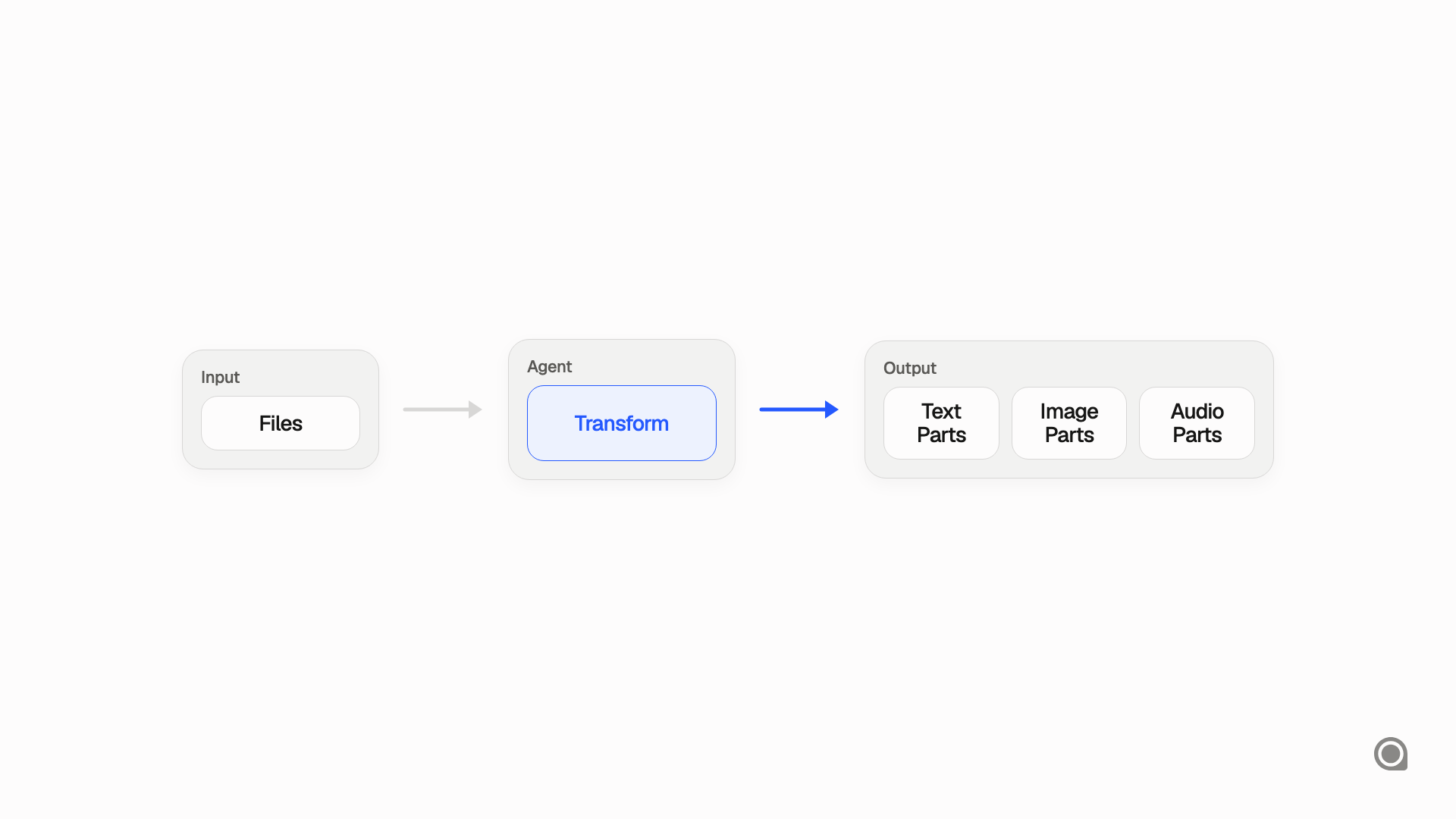
The file transformation pipeline turns files into structured content parts.
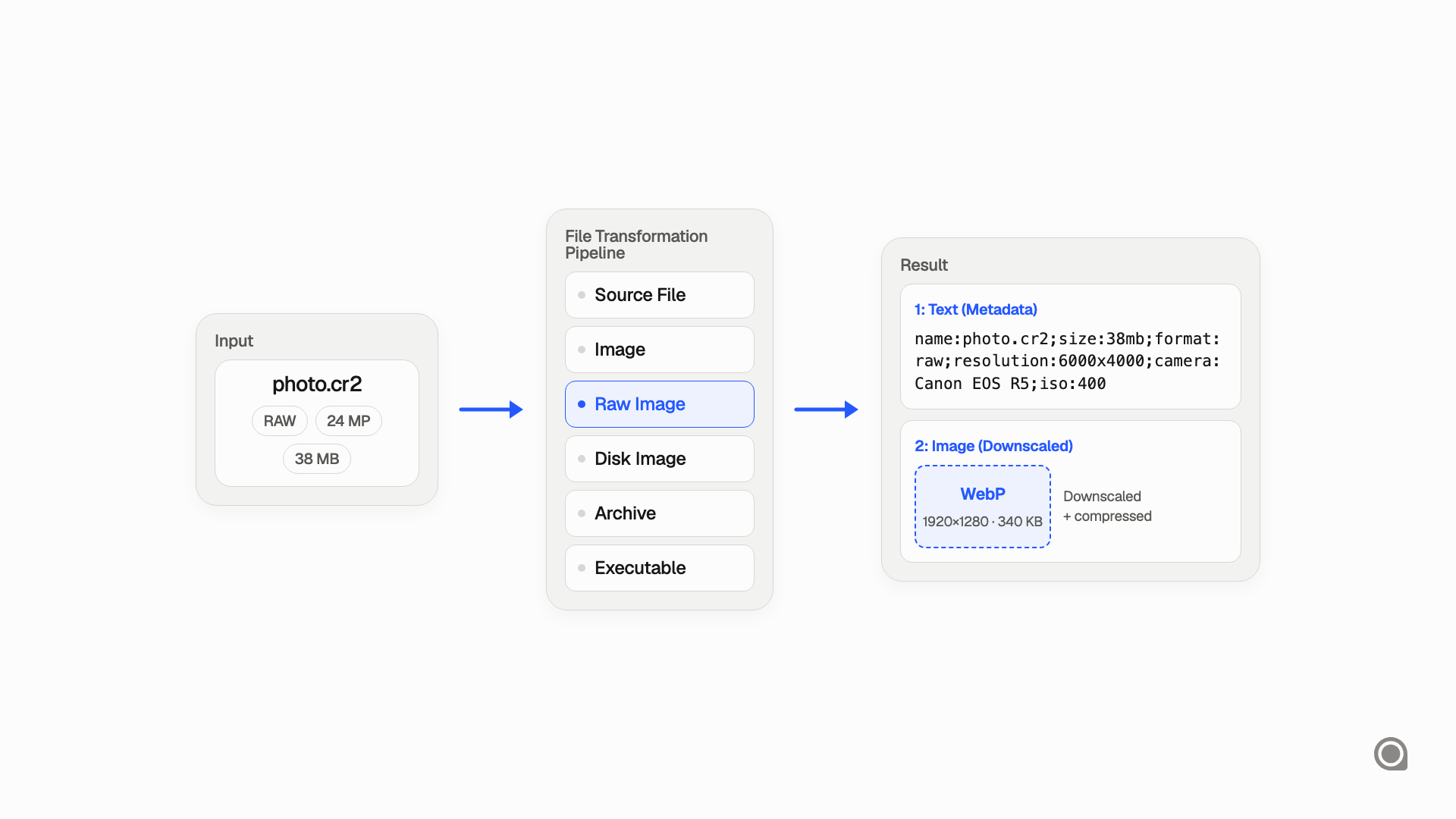
Image files are transformed into structured metadata and a compact representation. DeepSeek only operates on the metadata layer.
This does not give DeepSeek vision, but: It does give the model enough context to work sensibly with image files in a repository — for example when updating references, resizing assets, or understanding the layout of a design directory.